
Keynote Speakers
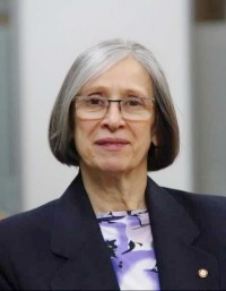
Professor, Ljiljana Trajkovic, Simon Fraser University, Canada(IEEE Fellow)
Biography: Ljiljana Trajkovic received the Dipl. Ing. degree from University of Pristina, Yugoslavia, the M.Sc. degrees in electrical engineering and computer engineering from Syracuse University, Syracuse, NY, and the Ph.D. degree in electrical engineering from University of California at Los Angeles. She is currently a professor in the School of Engineering Science, Simon Fraser University, Burnaby, British Columbia, Canada. Her research interests include communication networks and dynamical systems. Dr. Trajkovic served as IEEE Division X Delegate/Director, President of the IEEE Systems, Man, and Cybernetics Society, and President of the IEEE Circuits and Systems Society. She serves as Editor-in-Chief of the IEEE Transactions on Human-Machine Systems. She is and a Distinguished Lecturer of the IEEE Systems, Man, and Cybernetics Society a was a Distinguished Lecturer of the IEEE Circuits and System Society. She is a Fellow of the IEEE.
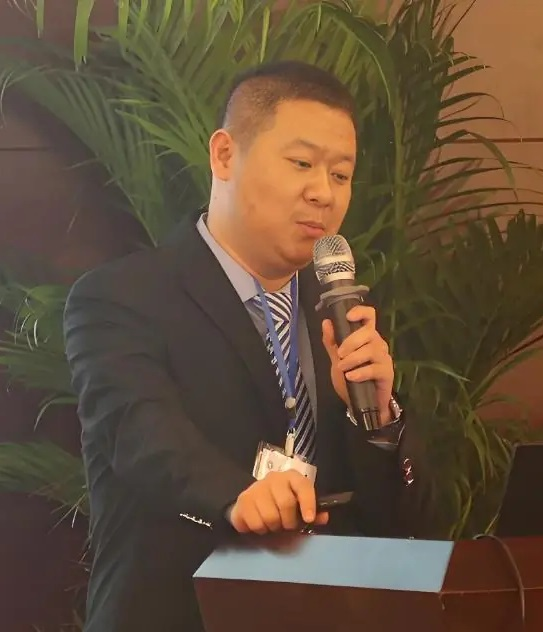
Professor, Lu Leng, Nanchang Hangkong University, China
Biography: LU LENG received his Ph.D degree from Southwest Jiaotong University, Chengdu, P. R. China, in 2012. He performed his postdoctoral research at Yonsei University, Seoul, South Korea, and Nanjing University of Aeronautics and Astronautics, Nanjing, P. R. China. He was a visiting scholar at West Virginia University, USA, and Yonsei University, South Korea. Currently, he is a full professor, doctoral supervisor, the dean of Institute of Computer Vision at Nanchang Hangkong University.
Prof. Leng has published more than 150 international journal and conference papers, including more than 80 SCI papers and three highly cited papers. He has been granted several scholarships and funding projects, including six projects supported by National Natural Science Foundation of China (NSFC). He serves as a reviewer of more than 100 international journals and conferences. His research interests include computer vision, biometric template protection, biometric recognition, medical image processing, data hiding, etc.
Prof. Leng was selected as one of the "World's Top 2% Scientists" four times, and awarded Jiangxi Youth May-4th Medal. He is an outstanding representative of "Innovation Talent" of Jiangxi Enterprise in "Science and Technology China", "Jiangxi Hundred-Thousand-Ten-thousand Talent Project", and "Jiangxi Voyage Project".
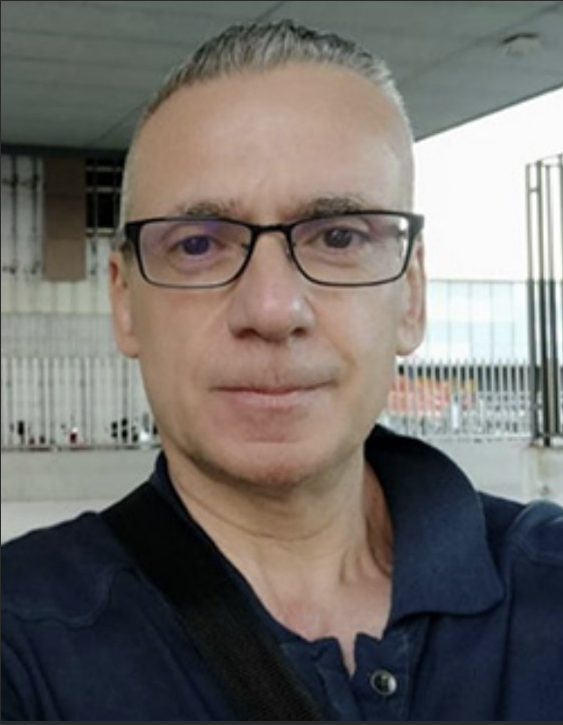
Professor, Roberto Garello, Politecnico di Torino, Italy
Biography: ROBERTO GARELLO (Senior Member, IEEE) received the Ph.D. degree in Electronic Engineering from Politecnico di Torino in 1994, with a thesis on error correction coding. During his doctoral studies, he was a visiting researcher at MIT, Cambridge, and ETH Zurich. From 1994 to 1997, he worked with Marconi Communications, Genoa. From 1998 to 2001, he was an Associate Professor at the University of Ancona. Since November 2001, he has been an Associate Professor with the Department of Electronics and Telecommunications at Politecnico di Torino. In 2017, he was an Adjunct Professor at California State University, Los Angeles. He has been responsible for more than 40 national and international research projects and has supervised over 15 Ph.D. students and more than 250 Master’s theses. His research interests include space communications, 5G and beyond networks, and error correcting codes. He has co-authored over 200 journal and conference papers. He leads the ASTRACOM research group at Politecnico di Torino, focusing on space communication systems and applications.
To be updated......

Copyright © ICANCT 2026 All rights reserved.